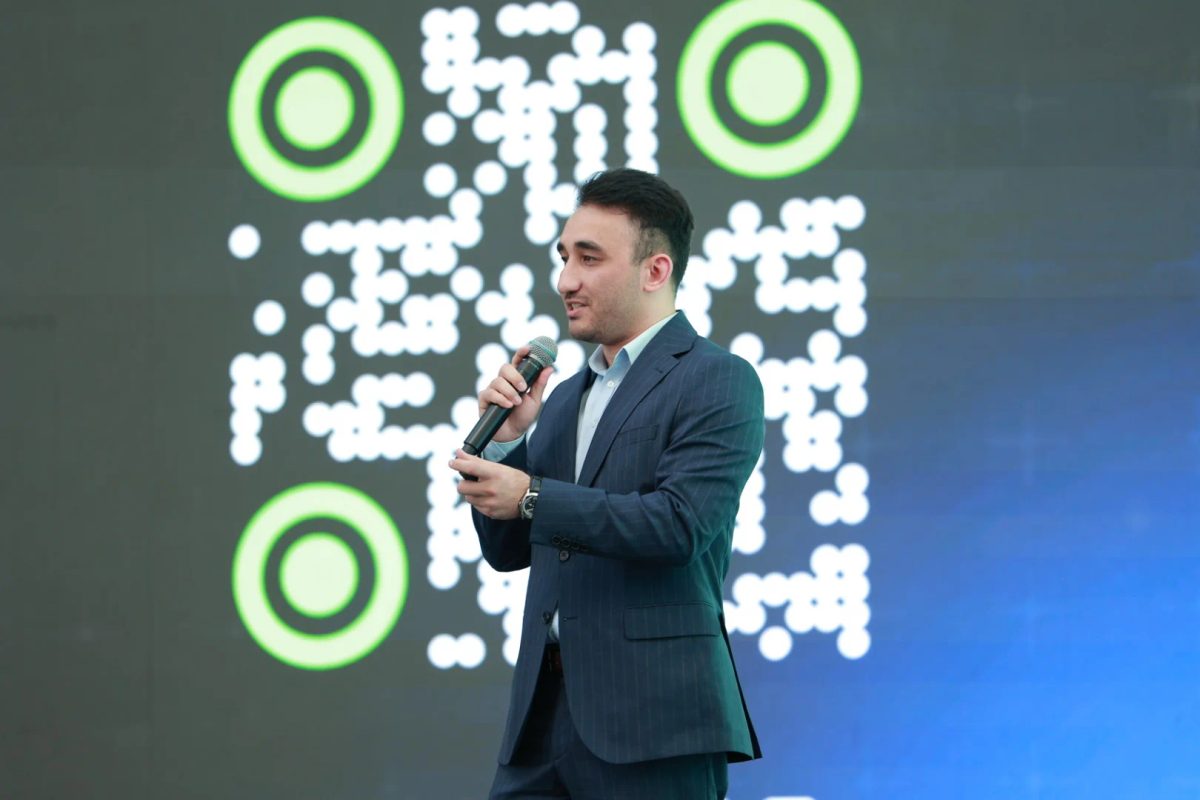
BEYOND THE PITCH: DALERKHON NODIROV ON WHAT IT PARK VENTURES LOOKS FOR IN STARTUPS
A confident pitch may open the conversation with an investor, but it is rarely enough to secure investment.
For Dalerkhon Nodirov, Director of IT Park Ventures, the quality of a startup becomes clearer when the discussion moves beyond the presentation and towards customers, economics, difficult decisions and the founder’s ability to respond to new evidence.
His journey into venture capital began with a challenge inside his own business. Working with a small team, he developed a technology solution that improved operations and saved the company several hundred thousand dollars over several years. That experience continues to shape how he evaluates startups today.
IT Park Ventures invests in technology companies from Pre-Seed to Series A. While the fund is sector-agnostic, it is placing particular emphasis on artificial intelligence in 2026 and continues to explore opportunities across FinTech, B2B SaaS, AgriTech, MedTech and other scalable technology sectors.
In this conversation, Dalerkhon discusses what makes a founder investable, how startups can demonstrate sustainable demand, which opportunities remain underserved in Uzbekistan and what Georgia-based companies need to qualify for investment from IT Park Ventures.
- What personal experience led you to work in startup financing?
My journey into startups began with a practical challenge: improving the efficiency of my own business and streamlining its operations. My academic background in Business Administration, combined with entrepreneurial experience, enabled me to take a systematic approach to product development. Working with a small team, we built a solution that saved the business several hundred thousand dollars over the course of a few years.
The next step was an invitation to join one of Uzbekistan’s first venture capital funds. Moving into venture capital allowed me to apply my entrepreneurial experience to working with other founders. Having built and developed my own startup continues to shape how I evaluate companies: it helps me better understand their operations, recognize the constraints their teams face, and assess their ability to turn a technological solution into a sustainable business.
- Was there a founder or startup that changed how you evaluate investment opportunities?
One principle stands out for me: you cannot judge a founder solely by how confidently they present their company. A strong pitch opens the conversation, but the quality of the business becomes clearer when you discuss customers, economics, and difficult decisions.
I pay close attention to how deeply founders understand the problem they are solving and how they respond to evidence that challenges their original assumptions. A founder who can acknowledge a mistake and adjust their approach may be more compelling than someone with a perfectly rehearsed answer to every question.
Confidence matters, but it needs to be accompanied by the ability to learn.
- What types of startups does IT Park Ventures invest in, and at which stages of their development?
We invest in technology startups from Pre-Seed to Series A. In 2026, we are placing particular emphasis on artificial intelligence. At the same time, we remain a sector-agnostic fund: we consider companies across industries where we see the potential to build a scalable international business.
For me, the team is one of the most important factors. At an early stage, the product may change and the business model may need to be rethought. That is why we look closely at how well the founders understand their customers, how their skills complement one another, and how they make decisions under uncertainty. We assess both what the team has already built and its ability to take the business further.
Our expectations depend on the company’s stage. At Pre-Seed, understanding the problem and showing initial evidence of demand are essential. At later stages, we place greater emphasis on revenue, customer retention, and unit economics. But the central question remains the same: why do customers choose this product, and what will enable the company to turn early traction into sustainable growth?
- Which unmet needs in Uzbekistan do you believe offer the strongest opportunities for startups today, and why?
Uzbekistan’s startup ecosystem continues to offer significant growth potential across a wide range of sectors. I would not yet describe any particular sector as a “red ocean”: even in FinTech and B2B SaaS, where competition is already evident, opportunities remain for companies that address specific customer needs and build effective sales capabilities.
At the same time, I see a substantial need for AgriTech and MedTech ventures. In Uzbekistan, where agriculture and livestock farming play an important economic role, technologies that improve productivity and resource efficiency are particularly relevant. In healthcare, population growth is driving demand for solutions that expand access to medical services, improve quality of care, and help the system use its resources more effectively. These are areas where entrepreneurs can build sustainable businesses with a tangible economic and social impact.
- What should foreign founders understand better about Uzbekistan’s startup market before entering it?
Uzbekistan should be approached as a market in its own right. Success in another country can help open doors, but it does not replace an understanding of local customers.
Our portfolio includes companies with diverse international experience, such as Ayan Capital, Push30, and the Uzbekistan-founded startup Datatruck. For any team entering a new market, it is important to identify which elements of its business model can be replicated and which need to be adapted to local conditions.
Localization goes far beyond translating an interface. It involves the value proposition, pricing, partner network, payment methods, and customer acquisition channels. Founders need to understand who makes purchasing decisions, whom customers trust, and which alternatives they currently use.
My advice is therefore to begin with substantive conversations with potential customers and validate demand. A strong local partner can help open doors, but the team itself must develop a deep understanding of the market.
- What are the biggest challenges your portfolio companies face when acquiring customers in Uzbekistan?
One of the key challenges is demonstrating why a customer should change an established way of working. Even when an existing process is inefficient, switching to a new solution requires time, resources, and trust in the provider.
Startups therefore need to explain both what their product does and the tangible results it can deliver: how much time it can save, which costs it can reduce, or how it can help increase sales. It is equally important to show how straightforward implementation and staff training will be.
Another challenge is turning initial deals into a repeatable sales process. A founder may personally persuade the first customers, but sustainable growth requires the company to understand which channels work, how much customer acquisition costs, and why customers continue using the product.
I would highlight three essential elements: trust, measurable value, and ease of implementation. Together, they help turn initial interest into long-term customer relationships.
- Can you share an example of how IT Park Ventures helped a portfolio company connect with a customer or partner in Uzbekistan?
Our support for startups begins long before we invest. Through the IT Park Uzbekistan ecosystem, founders have access to a range of support programs that help them develop their products, strengthen their businesses, and connect with potential customers and partners.
Once a startup joins the IT Park Ventures portfolio, this support expands further and is tailored to the team’s specific needs. Beyond capital, we provide strategic expertise and facilitate business connections in Uzbekistan, helping founders build relationships that support their continued growth.
- What have you learned from conversations with founders whose startups you were unable to fund?
A fund’s decision not to invest is not the same as a judgment on a business’s prospects. A company may be solving an important problem while falling outside our target stage, investment strategy, or expected growth profile.
That is why I believe it is important to explain the reasoning behind a decision. If we need stronger evidence of demand, we should say so. If the concern relates to the economics or structure of the business, we should identify it clearly.
These conversations also require investors to examine their own assumptions. We need to distinguish between weaknesses in a business and gaps in our own understanding of the industry. A decision not to invest does not necessarily mean that a founder should change direction. Sometimes, the company needs a different type of capital or a partner with different expertise.
- Has new information ever changed your initial assessment of a startup? What did that experience teach you?
An initial assessment should remain a working hypothesis. It can change as you examine the data, see the product in action, or speak with customers.
For example, a solution may initially appear to serve a narrow need. But if further analysis shows that it supports a critical business process and customers consistently pay for it, that changes your understanding of the opportunity.
The reverse can also happen: a strong presentation attracts attention, but further analysis reveals that demand has yet to be validated.
My principle is to test first impressions and remain willing to revise them. An investment decision should become better informed as new evidence emerges.
- Can Georgia-based startups qualify for investment from IT Park Ventures? What requirements would they need to meet, and what would make them particularly attractive to the fund?
We work with international teams and consider investment opportunities across different countries, so startups based in Georgia are also welcome to approach IT Park Ventures. We place particular emphasis on regional ventures and companies founded by our compatriots.
Each investment decision is based on a comprehensive assessment of the company and its alignment with the fund’s strategy and requirements. One condition for receiving investment is establishing a subsidiary in Uzbekistan and conducting operational activities there, such as setting up a back office. We expect the company’s local presence to involve substantive business operations and long-term engagement with the local ecosystem.
- When would you advise a startup to finance its initial market-entry efforts with its own resources rather than seek investment?
If the key assumptions can be tested with a modest budget, I would recommend doing that first. Speak with potential customers, test the proposition, assess willingness to pay, and identify which product changes are genuinely necessary.
This helps avoid raising capital for a large-scale launch before the company knows whether its business model works in the new market.
There is no universal rule, however. Some products require substantial spending before the first sale is possible. The important point is to match the source of funding to the task.
Founders benefit from approaching investors with a clear understanding of which uncertainties they have already resolved and what specific milestone the investment will help them reach.
- What first step would you recommend to a Georgian startup entering Uzbekistan? Can you share a real example that explains why this step matters?
As with any new market, I would recommend starting by understanding Uzbekistan’s business environment, cultural nuances, customer behavior, and potential risks. It is important to recognize that the market is still developing: in some segments, a startup will need not only to introduce a product but also to establish new consumer habits. This takes time and should be reflected in the team’s strategy, budget, and expectations.
The next step is to select a specific customer segment and validate demand. Early conversations should establish who makes the purchasing decision, which outcomes matter to the customer, what could hinder implementation, and what the customer is actually willing to pay for. The team should then launch a small pilot with clearly defined success criteria agreed in advance.
This approach also lays the groundwork for raising capital. Local funds are generally more receptive to investing in teams that understand the market and can demonstrate demand through their work with customers. A successful pilot helps show that the product meets a real need and that the team can adapt to local conditions and use investment effectively.
FOR IT PARK VENTURES, AN INVESTMENT DECISION BEGINS WITH EVIDENCE RATHER THAN PRESENTATION
Dalerkhon’s experience illustrates why a polished pitch is only the beginning of an investor’s assessment.
At an early stage, products and business models can change. The ability of the founding team to understand customers, test assumptions, acknowledge mistakes and adapt to new evidence can therefore matter as much as the initial idea.
For companies entering Uzbekistan, localization must extend beyond translating the interface. Pricing, payment methods, customer acquisition channels, purchasing decisions and trusted relationships may all need to be adapted to the local market.
The interview also provides a clear route for Georgian startups interested in Uzbekistan. Begin by selecting a specific customer segment, speaking directly with potential customers and testing demand through a small pilot with agreed success criteria.
Georgia-based startups can approach IT Park Ventures, but investment requires more than remote interest in the market. A company must be prepared to establish a subsidiary in Uzbekistan, conduct substantive operations locally and demonstrate a long-term commitment to the ecosystem.
The central lesson is simple: test assumptions before committing to a large-scale launch. A startup that understands its customer, demonstrates measurable value and proves that its sales process can be repeated will enter both the market and the investment conversation from a stronger position.
We are grateful to Dalerkhon Nodirov for sharing his experience, investment perspective and practical recommendations with the Georgia-Uzbekistan Business Hub community.