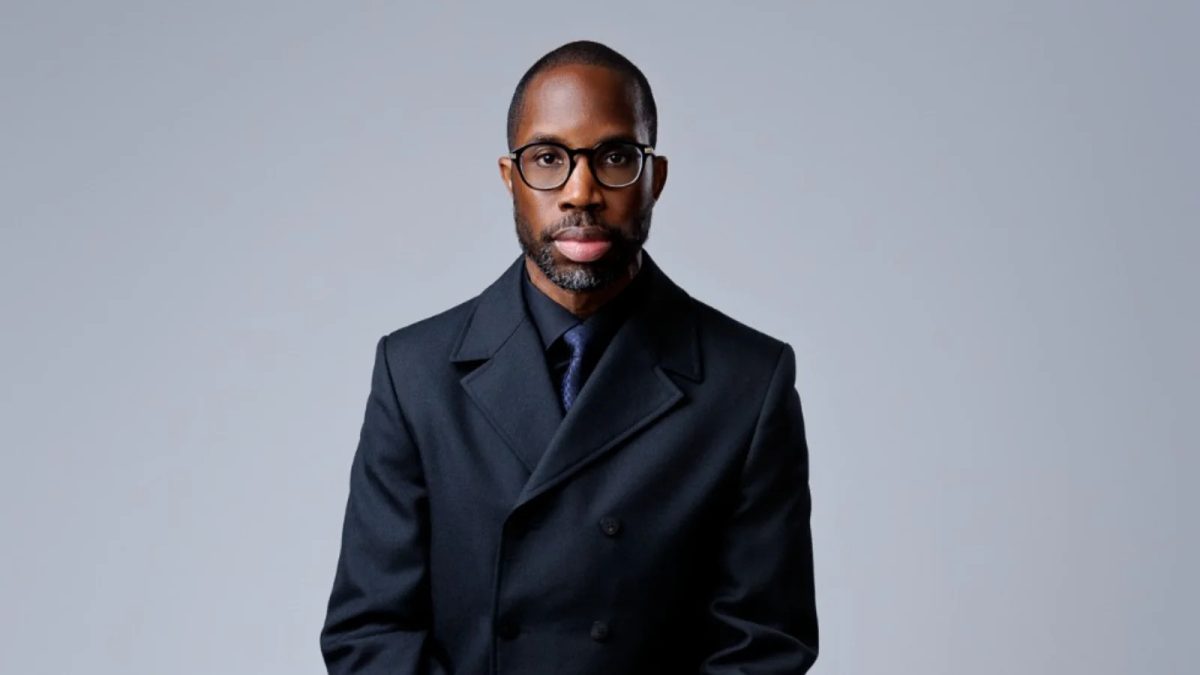
FROM OPERATOR TO INVESTOR: MICHAEL LINTS ON BUILDING GOLDEN GATE VENTURES’ PRESENCE IN UZBEKISTAN
For Michael Lints, venture investing began with firsthand experience of building and selling a company.
After co-founding an IT managed services business in the Netherlands in 2000 and exiting seven years later, he found that founders of small and medium-sized businesses were increasingly approaching him for advice. They needed capital, but they also needed a clear plan for their next stage of growth.
That experience led him to establish a venture fund for Dutch SMEs in 2007 and later join Golden Gate Ventures in 2013. Today, as Founding Partner for MENA, he co-leads the firm’s regional fund from Doha and is helping build its presence in Uzbekistan.
What attracted Golden Gate Ventures to the country was not only the growth of venture funding or the emergence of Uzbekistan’s first unicorn. A local presence revealed deeper opportunities in fintech, agritech and other sectors, as well as a generation of product managers and engineers beginning to build new companies.
In this conversation, Michael discusses why Golden Gate Ventures established a local operation, how the firm tests partners and revenue quality, what makes a Georgian company relevant to its investment strategy, and why management time can become the most underestimated cost of entering a new market.
- Which moment in your own business or finance career led you towards venture investing?
I started as an operator. In 2000 I co-founded an IT managed services company in the Netherlands, and a data and telecom company acquired it seven years later. The moment that moved me toward investing came not long after the exit. Founders of small and medium-sized companies kept approaching me for advice on how to expand their business. Most of them had no access to capital or a plan for the next stage.
In 2007 I set up a venture fund for Dutch SMEs to work on exactly that problem. That fund is how I got to know Golden Gate Ventures, which I joined in 2013. I have invested in emerging markets since then, first from Singapore and now from Doha, where I co-lead the firm's MENA fund together with Hussain Abdulla.
- What first made Uzbekistan personally interesting to you?
Two things came together. Our fund has Omani investors, and Oman and Uzbekistan have built a close investment relationship, so Uzbekistan was already part of our conversations before I had visited.
When I looked at the market myself, the pace and ambition surprised me. Venture funding went from almost nothing in 2020 to more than USD 300 million in 2025, the country produced its first unicorn in Uzum, and 60 percent of the population is under 30. A decade ago the question was whether Uzbekistan would build a startup ecosystem. It’s now clear that their strategy is paying off with events like ICT Week, TIIF, accelerators and funds expanding to Tashkent. As a fund, we want to be there early for that.
- Which business need made a local office necessary?
Impact on the companies we back. We learned in Southeast Asia, and again in Qatar, that our investment strategy works better when we are close to the founders. A local presence lets us meet founders before they raise, sit in on customer conversations, help with hiring, business development, and strategic relationships.
It also matters to the companies in our MENA portfolio that are looking at Uzbekistan. We can introduce them to IT Park, to local partners, and to first customers because we are there ourselves. The legal structure followed from that decision. Once we knew we wanted to invest and support companies on the ground, a local entity became the natural way to do it.
- What opportunity became visible on the ground that you could not see remotely?
The depth of the fintech opportunity and other verticals such as agritech. From outside you see Uzum, Payme and Click as names on a slide. On the ground you see that these companies have trained a generation of product managers and engineers who are starting their own companies, and that the payment rails and logistics they built lower the cost of launching anything consumer-facing.
The second thing was demand from the other direction. Several of our MENA portfolio companies asked about Uzbekistan once we had a presence there. That is why part of our local allocation is reserved for portfolio companies expanding into the country alongside direct investments in Uzbek founders.
- What operational role does the partnership with UzOman play?
UzOman is our strategic partner in Uzbekistan and our closest institutional relationship in Tashkent. Beyond investing, UzOman's mission is to strengthen the economic relationship between Oman and Uzbekistan. That gives us a direct line into both governments and into the Omani investors who already back our main fund, which matters when a portfolio company needs a regulator's attention, expands cross-border, or pursues strategic collaboration.
- Which capability is essential in your local team?
A strong capability is local verification. We need people who know the market well enough to help us navigate its intricacies and support our local portfolio. In a market this young, that knowledge is worth more to us than another financial model.
- What was hardest when persuading your team or investors to pursue this market?
The venture structure in Uzbekistan is still developing, but it's making big strides. Most investors are used to standard LP – GP structures, and Uzbekistan is working towards that.
Explaining that we could reach an equivalent outcome through contract took time and good counsel in Tashkent. The market itself was an easier conversation. Once people saw the growth rate and the valuations relative to the GCC, the discussion moved to execution.
- How do you test whether a local partner can bring customers to a portfolio company?
We ask for introductions before we sign anything. If a partner says they can open doors for a portfolio company, we ask them to open two or three during due diligence, and we follow those conversations ourselves.
We then look at what happens over the next 90 days. Did a pilot start, did a contract get signed, and did the partner stay involved after the introduction? A partner who delivers one paying customer during diligence has told us most of what we need to know.
- What evidence shows that an Uzbek company's revenue is sustainable?
We look at repeat behavior. Monthly revenue over at least twelve months, cohort retention, and how much of the revenue comes from the top three customers. We want to see revenue in som, with the founder's own view on currency risk, and we want to see that pricing has held without discounting to hit targets.
We also check how much revenue depends on a single government contract or bank partnership, because those relationships can change quickly. Where we can, we meet customers directly. As part of the early-stage program in Tashkent, we tell founders they deserve honesty more than encouragement.
- Can you describe an expansion whose results made you rethink your original decision?
Our entry into Uzbekistan felt like building a new startup, and we went through several iterations before we could launch the fund. Obviously, we had many conversations about how the expansion would pan out long term.
- What would make a Georgian company's entry into Uzbekistan interesting for your fund?
A product that already works in a comparable market. Georgia and Uzbekistan share institutional history, a banking sector that modernized quickly, and an SME base that is only now moving onto digital tools. A Georgian company in fintech, logistics, agritech or enterprise software that has real customers at home and treats Uzbekistan as its first large market is interesting to us.
Practically, the company needs to be willing to incorporate an Uzbek subsidiary, because our local vehicle invests onshore. We also look at whether Uzbekistan is a step toward the wider Central Asian market and, through our network, the GCC. That is where our fund adds the most beyond capital.
- If you could recommend just one first step to a Georgian company seeking partners in Uzbekistan, what would it be?
Spend a week in Tashkent before you choose a partner. Go through IT Park, meet the founders and the local funds, and sit with potential customers. Most of the partnership offers you receive remotely look different once you have seen who has access to customers and who has a well-furnished office.
Registering a company takes a few days once the documents are ready, so there is no reason to rush that step. Choosing the wrong partner can cost a year.
- What did you personally change after that expansion?
I now do the groundwork in person. I registered as a taxpayer in Uzbekistan myself, signed the incorporation documents in Tashkent, and sat through the translation and notarization process. That gave me a feel for how the system works that no advisor's summary could.
I also changed the order of operations. In a new market, structure and counsel now come before deal flow, and I bring local lawyers into the first conversation with a partner. I also spend more time in Tashkent than I had planned, because the relationships that matter there are built in person.
- Which cost is easiest to underestimate when building operations in a new country?
Management time. The direct costs of setting up in Uzbekistan are small. Registration is often quick. What adds up is the time of senior people. Budget for efficiency, and hire the local administrative capability early.
- Which real case led you to give that market-entry advice?
Our own entity setup in 2026. We had a clear plan, a good partner in IT Park and a cooperative regulator, and it still took several trips and several months to move from a memorandum of understanding in April to a registered company in June and an operating structure by the autumn.
The steps were simple, and each one takes time. That experience is why I tell companies to get on the ground early, hire the administrative capability first, and treat the calendar as the real cost.
MICHAEL’S EXPERIENCE SHOWS WHY ENTERING A MARKET REQUIRES MORE THAN CAPITAL AND A REGISTRATION CERTIFICATE
Golden Gate Ventures’ entry into Uzbekistan reflects a wider shift in how international investors are approaching the country. The market is increasingly viewed not only as a source of local startups, but also as a platform for companies expanding between Central Asia, MENA and the GCC.
A local presence allows the firm to meet founders before they begin raising capital, participate in customer conversations and support portfolio companies with hiring, partnerships and business development.
For Uzbek founders, Michael’s answers provide a clear picture of what an international investor will examine. Sustainable revenue requires repeat behaviour, customer retention, diversified income, pricing discipline and a clear understanding of currency risk. Relationships with major banks or government institutions can be valuable, but investors will also assess how dependent the business is on any single partnership.
For Georgian companies, the opportunity is equally specific. Golden Gate Ventures is interested in companies operating in fintech, logistics, agritech and enterprise software that have already demonstrated demand in Georgia and see Uzbekistan as a first step toward a larger regional market.
Michael’s advice is to spend time in Tashkent before selecting a local partner. Introductions, customer access and practical involvement should be tested before formal agreements are signed. A professional office or a strong presentation cannot replace evidence that a partner can help secure a pilot or paying customer.
His experience also highlights the difference between the formal cost and the real cost of expansion. Company registration may be quick and relatively inexpensive, but management time, repeated visits, local administration and professional counsel can determine how long the process actually takes.
We are grateful to Michael Lints for sharing his experience, investment perspective and practical advice with the Georgia-Uzbekistan Business Hub community.