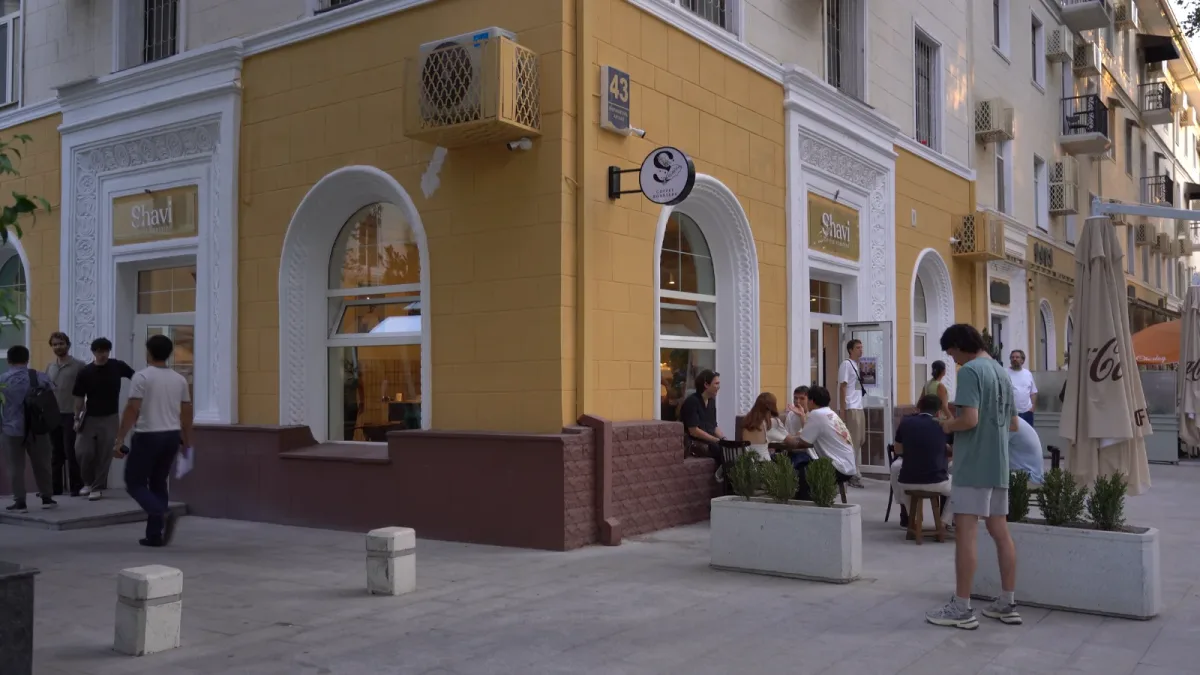
Some market-entry stories begin with major investments. Others begin with a strong product, a distinctive brand and a decision to test that concept in a new city.
Shavi Coffee Roasters belongs to the second group. The Georgian specialty coffee brand expanded from Tbilisi to Tashkent and has now opened its second location in the Uzbek capital.
That second opening matters because the story is no longer only about entering a market. It is about beginning to grow within it.
From Tbilisi to a New Market
A successful concept at home does not automatically produce the same result abroad. Customer habits, locations, competition and expectations can all change.
For hospitality businesses, this is especially important. A café is a highly local business: customers experience the brand through the product, service, atmosphere, location and repeated everyday interactions.
Shavi entered Tashkent with an identity already developed in Georgia-its specialty coffee focus and distinctive brand experience. Building a sustainable operation in Uzbekistan, however, also requires a local customer community.
Why the Second Location Matters
The first location tests the opportunity. It gives a company the chance to understand customer behaviour, refine operations and build initial recognition.
A second location sends a different signal. It suggests that the company sees enough potential to deepen its presence.
For Shavi, the move represents a transition from market entry to market development.
A Practical Model for Consumer Brands
Shavi’s expansion highlights a simple approach that can be relevant to other Georgian hospitality and lifestyle brands:
- start with a clear, differentiated concept;
- enter at a manageable scale;
- learn how customers respond;
- build a local community;
- expand when the operating model is ready.
The key is balancing brand consistency with local relevance. International growth works best when a company preserves what makes the original concept distinctive while learning how to operate effectively in the new environment.
Georgian Brands in Uzbekistan
Shavi’s story is part of a wider trend of Georgian businesses exploring the Uzbek market. Each successful expansion makes cross-border growth more tangible for companies considering the same direction.
With two locations in Tashkent, Shavi is taking another step toward a longer-term presence in Uzbekistan-and showing that regional expansion does not always require enormous scale to begin.
Sometimes it starts one location, one customer community and one cup at a time.
Why Tashkent Is Relevant
Tashkent provides an environment in which new restaurants, cafés and consumer concepts are increasingly visible. For a Georgian hospitality brand, that creates the possibility of testing a familiar regional market while operating at a different scale from Georgia.
Shavi’s path is particularly useful because it is incremental. The company did not need to begin with a large network. One location created a point of entry and a way to learn the market; the second location indicates a willingness to build on that experience.
For other consumer brands, the lesson is not that the same model will work automatically. It is that international expansion can be approached as a sequence of tests, learning and measured growth rather than as a single high-risk launch.
FROM TBILISI TO TASHKENT - AND JUST GETTING STARTED.
Market Entry Stories by Georgia–Uzbekistan Business Hub