Uzbekistan is accelerating privatisation as part of a broader effort to reduce state participation in the economy, expand the private sector and attract new investment.
Under a presidential decree adopted on 28 August 2026, the government plans to offer state-owned shares in 84 business entities, 1,242 real estate properties and approximately 8,000 hectares of land for business and urban development.
The total estimated value of the assets to be offered is UZS 100 trillion. The programme also introduces more flexible payment terms, discounts for early payment and new auction mechanisms.
For businesses, the programme represents more than an opportunity to purchase state property. It could create new routes into the Uzbek market, support the modernisation of existing enterprises and generate demand for investment, technology and professional services.
What Is Being Offered
According to Uzbekistan’s State Assets Management Agency, the new privatisation measures cover:
- State-owned shares in 84 business entities
- 1,242 real estate properties
- Approximately 8,000 hectares of land
- 84 previously unsold assets to be re-offered at auction
- Assets held on the balance sheets of state-participated commercial banks
The programme also provides for the liquidation or reorganisation of 85 state-owned enterprises.
Major state assets, including UzAuto Motors and its affiliated enterprises, Navoiyazot and thermal power plants, have also been identified as part of Uzbekistan’s broader privatisation preparations.
The inclusion of an asset in a programme does not necessarily mean an immediate or unconditional sale. Timelines, ownership structures, investor requirements and transaction methods may differ.
New Terms for Investors
One of the most important elements of the reform is the introduction of more flexible payment conditions.
The advance payment required for the purchase of an asset is set to fall from 35% to 15%, while the remaining amount may be paid in instalments without interest.
Additional terms for major transactions include:
- A 25% discount when the full purchase price is paid within six months
- Interest-free instalments of up to five years when 35% is paid within three months
- Interest-free instalments of up to seven years when 50% is paid within six months
If an asset remains unsold for three months, its price may be reduced in stages.
A hybrid auction mechanism may also be used in certain cases, combining an initial price reduction with competitive bidding if several buyers become interested.
These measures are intended to make state assets more accessible to private investors while increasing the likelihood that unused or underperforming assets return to productive economic use.
Land as a Ready-to-Use Investment Package
The decree introduces a ready-to-use package approach for selected land plots.
Under this model, technical conditions for connecting to utility networks and the required permits should be prepared before the land is offered.
If implemented effectively, this could reduce one of the most common barriers facing investors: the time required to clarify infrastructure access and obtain initial approvals.
For companies planning manufacturing, warehousing, logistics, hospitality, retail or commercial property projects, greater readiness at the land-acquisition stage could improve investment planning.
However, investors should still conduct independent due diligence on utilities, land-use conditions, construction requirements and development obligations.
What It Could Mean for Uzbekistan’s Market
Greater Private-Sector Participation
The transfer of assets from the state to private owners can introduce new capital, commercial discipline and stronger incentives for operational improvement.
Modernisation of Existing Enterprises
Some privatised companies may require new equipment, technology, management systems and workforce development.
This could generate business for suppliers, technology companies, advisers and training providers.
More Competition
Reducing state participation in competitive sectors may create space for private businesses to enter markets previously dominated by state-owned entities.
Greater competition can support better services, improved productivity and more market-based pricing.
New Investment Ecosystems
A privatisation transaction rarely ends with the purchase of an asset.
It can create demand for:
- Financial and legal due diligence
- Asset valuation
- Corporate restructuring
- Technology upgrades
- Branding and marketing
- Recruitment
- Supply-chain development
- Export strategy
- Environmental compliance
- Property and facility management
The wider economic opportunity may therefore be larger than the value of the assets being sold.
Opportunities for Uzbek Companies
Uzbek companies may be well positioned to understand local demand, operating conditions and sector-specific regulations.
Potential opportunities include:
- Acquiring state shares, real estate or business assets
- Expanding production through existing facilities
- Creating joint ventures with foreign investors
- Becoming local operating partners
- Supplying privatised companies
- Providing construction, maintenance and logistics services
- Supporting restructuring and digital transformation
- Developing land offered for business purposes
Small and medium-sized enterprises may not need to acquire an entire company to benefit.
They could provide services to new owners or participate in the commercial ecosystem around modernised assets.
Opportunities for International Companies
For international investors, privatisation could provide a route into Uzbekistan through an existing asset rather than establishing an operation entirely from the beginning.
Potential opportunities include:
- Acquiring full or partial ownership in local enterprises
- Entering joint ventures with Uzbek partners
- Modernising production facilities
- Introducing new products and management systems
- Developing commercial and industrial real estate
- Providing equipment, technology and operational expertise
- Supporting corporate restructuring
- Expanding exports from Uzbekistan to regional markets
Companies in manufacturing, energy, chemicals, logistics, healthcare, education, hospitality and professional services may find relevant opportunities as details of individual assets are published.
Participation by foreign investors will depend on the legal structure of each transaction, sector restrictions, qualification requirements and conditions attached to the sale.
Opportunities for Georgian Companies
Georgian companies may participate as investors, strategic partners or service providers.
Financial, Legal and Transaction Advisory
Georgian advisers with cross-border experience could support investors with:
- Market assessment
- Financial analysis
- Due diligence
- Transaction structuring
- Tax planning
- Partner identification
- Post-acquisition integration
Local Uzbek legal advice will still be essential for transactions governed by Uzbek law.
Logistics and Export Development
Privatised manufacturers may need new export routes and logistics partners.
Georgian transport and logistics companies could help connect Uzbek producers with Black Sea ports, the Caucasus and European markets.
Technology and Business Modernisation
Georgian companies could offer:
- Enterprise software
- Cybersecurity
- Financial technology
- E-commerce solutions
- Digital marketing
- Customer-management systems
- Business-process consulting
Hospitality, Healthcare and Education
The planned commercialisation of major public higher-education institutions and specialised medical centres may create partnership opportunities for private operators and service providers.
Georgian universities, clinics, training organisations and hospitality companies could explore institutional partnerships, management services and joint programmes where the legal framework permits.
A Trilateral Partnership Model
A practical model could combine:
International capital + Uzbek assets and market knowledge + Georgian logistics, technology or professional services.
This could allow Georgian companies to participate without taking on the full financial responsibility of purchasing a major asset.
Due Diligence Remains Essential
Flexible payment terms and lower starting prices do not automatically make an asset a good investment.
Before participating, investors should examine:
- Ownership and title
- Existing debt and liabilities
- Pending litigation
- Condition of buildings and equipment
- Environmental obligations
- Employment commitments
- Land-use restrictions
- Utility access
- Licensing requirements
- Investment and performance obligations
- Rules on foreign ownership
- Exit and profit-repatriation conditions
A low acquisition price may be accompanied by substantial modernisation costs or contractual obligations.
How Companies Can Prepare
Companies interested in the programme can begin by:
- Monitoring the State Assets Management Agency and E-auksion
- Identifying sectors that match their expertise
- Building relationships with Uzbek legal and financial advisers
- Preparing investment criteria and budget limits
- Identifying potential joint-venture partners
- Arranging technical and financial due-diligence teams
- Reviewing foreign investment and competition rules
- Assessing post-acquisition capital requirements
- Developing a clear operational plan before bidding
The strongest investors will be those able to demonstrate not only the capacity to buy an asset, but also a credible plan to operate, modernise and develop it.
The Outlook
Uzbekistan’s expanded privatisation programme could create new entry points for domestic and foreign businesses while accelerating the transition towards a more private-sector-led economy.
For Uzbek companies, it offers opportunities to acquire assets, expand operations and attract strategic partners.
For international businesses, it may provide access to existing enterprises, industrial infrastructure and land in one of Central Asia’s largest markets.
For Georgian companies, the most realistic opportunities may combine investment with transaction advisory, technology, logistics, education, healthcare and market-access services.
The programme’s long-term impact will depend on transparency, competitive auctions, investor access and the ability of new owners to transform acquired assets into productive businesses.
Important Clarification
The programme includes different types of assets and sale mechanisms. Not every asset will be available under identical conditions, and not every sector may be equally open to foreign ownership.
Companies should confirm the status, legal conditions and investor obligations of each asset through official sources before taking part in an auction or transaction.
Sources
- State Assets Management Agency: Uzbekistan Accelerates Privatisation
- President of Uzbekistan: Measures to Reduce State Presence in the Economy
- State Assets Management Agency: Online Auction Results
- Reuters: Uzbekistan Plans International Offering of National Investment Fund Stake
- E-auksion Electronic Trading Platform
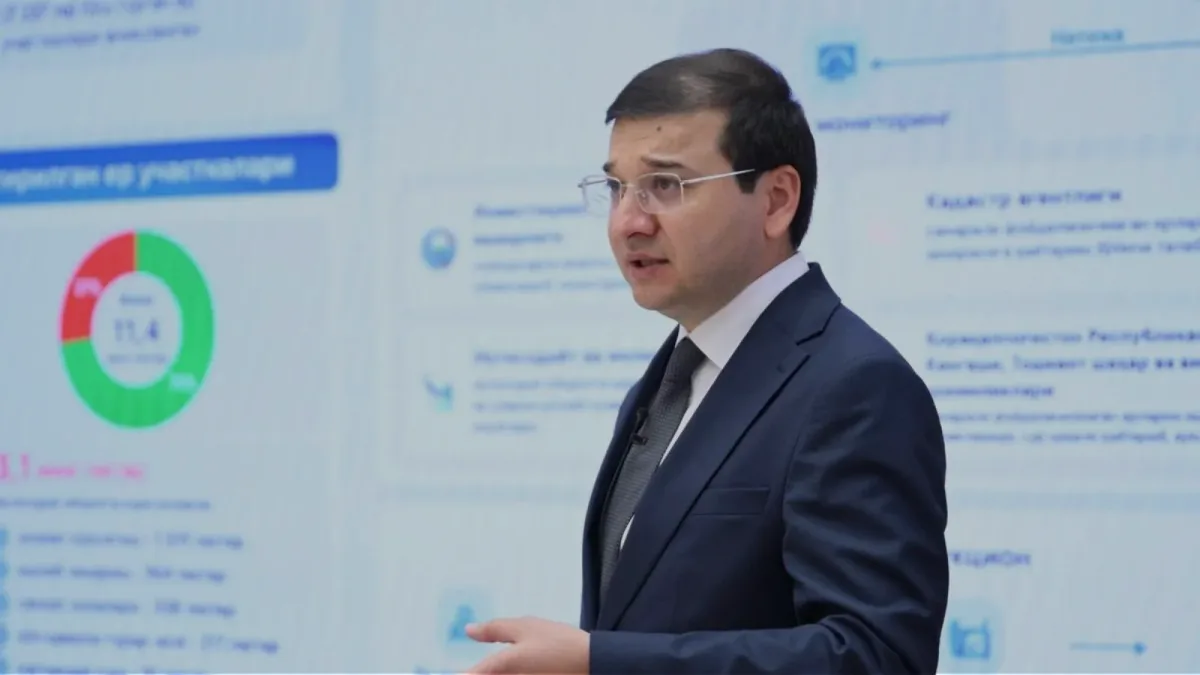
Photo credit: State Assets Management Agency of the Republic of Uzbekistan
Photo source: State Assets Management Agency