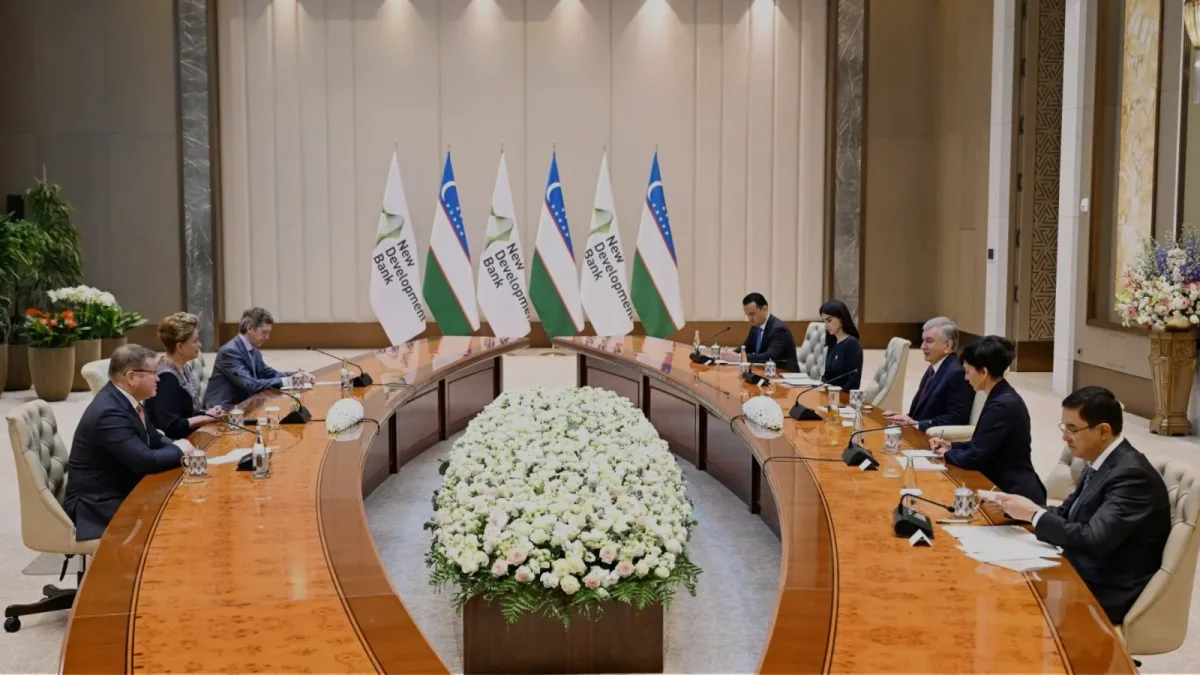
Uzbekistan’s membership in the New Development Bank opens a new channel for financing infrastructure, sustainable development and economic modernisation.
The country officially joined the NDB in June 2026, becoming the institution’s first member country from Central Asia. As part of the developing partnership, Uzbekistan has prepared proposals for a portfolio of more than 20 projects worth approximately US$4.5 billion.
The proposed pipeline could support transport infrastructure, water management, clean energy, municipal services and other priority areas. Its significance, however, extends beyond the financing itself.
If the projects move into implementation, they could generate demand for construction, technology, logistics, engineering and professional services, creating opportunities for Uzbek companies and international businesses, including companies from Georgia.
A New Source of Development Finance
The New Development Bank was established by the BRICS countries to finance infrastructure and sustainable development in emerging markets.
Its priority areas include:
- Transport infrastructure
- Clean energy and energy efficiency
- Water and sanitation
- Environmental protection
- Social infrastructure
- Digital infrastructure
- Sustainable urban development
Uzbekistan’s proposed US$4.5 billion pipeline includes more than 20 projects. However, a project pipeline should not be interpreted as approved financing.
Individual projects may still require feasibility studies, environmental and social assessments, financial structuring, government approval and final consideration by the NDB.
What It Could Mean for Uzbekistan’s Market
The significance of the NDB partnership is not limited to the construction of individual roads, utilities or public facilities.
A large infrastructure programme can influence the wider business environment by reducing operating costs, improving connectivity and creating markets around newly developed assets.
Better Infrastructure for Business
Improved transport, energy, water and municipal infrastructure can reduce barriers for companies operating in Uzbekistan.
More reliable infrastructure could help businesses:
- Move goods more efficiently
- Reduce logistics and production costs
- Access new cities and regions
- Establish manufacturing facilities outside existing industrial centres
- Improve the reliability of supply chains
- Serve a larger customer base
Stronger Regional Connectivity
Investment in transport corridors could strengthen Uzbekistan’s links with neighbouring markets and international trade routes.
For an economy without direct access to the sea, infrastructure that connects production centres with regional transport networks is especially important.
Greater connectivity could support Uzbekistan’s development as a manufacturing, logistics and distribution centre for Central Asia.
Growth Beyond Construction
Infrastructure projects create business activity beyond the initial construction phase.
New opportunities may emerge in:
- Equipment maintenance
- Facility management
- Digital monitoring
- Logistics services
- Energy management
- Environmental compliance
- Workforce training
- Security and operational support
The long-term economic value of the pipeline could therefore extend beyond the original project budgets.
Opportunities for Uzbek Companies
Uzbek companies could participate in the proposed projects as contractors, subcontractors, suppliers and local operating partners.
Potential opportunities include:
- Construction and civil engineering
- Building materials and industrial products
- Transport and logistics
- Electrical and mechanical systems
- Water-management solutions
- Renewable-energy equipment
- Software and digital infrastructure
- Environmental assessment
- Legal and financial advisory services
- Recruitment and workforce training
Local participation could also help Uzbek companies gain experience working under international procurement, environmental and reporting standards.
For small and medium-sized enterprises, the most accessible opportunities may appear within the wider supplier ecosystem around each project.
These could include transportation, accommodation, catering, equipment rental, translation, recruitment, local research and administrative support.
Opportunities for International Companies
International companies may find opportunities where projects require technology, expertise or equipment that is not yet widely available locally.
Potential areas include:
- Engineering, procurement and construction
- Project design and supervision
- Renewable energy and energy storage
- Smart water and metering systems
- Wastewater treatment
- Urban transport solutions
- Industrial automation
- Digital infrastructure and cybersecurity
- Environmental and social consulting
- Project finance, insurance and risk management
International businesses could participate independently where procurement rules permit or through partnerships with Uzbek companies.
A local partner may help a foreign company understand regulatory requirements, procurement procedures, labour conditions and operational realities more effectively.
Opportunities for Georgian Companies
Georgia is not a member of the NDB, so Georgian companies should not assume that they will receive direct access to NDB financing.
Their opportunity is more likely to come through participation in individual projects, commercial partnerships and the wider business activity created by infrastructure development.
Logistics and Regional Connectivity
Georgian logistics companies could support the movement of equipment, technology and materials between international markets and Uzbekistan.
Georgia’s ports, railways and position along the Middle Corridor could make it an important link between Central Asia, the Caucasus and Europe.
Engineering and Professional Services
Georgian companies with experience in infrastructure, energy, environmental consulting and project management could offer specialised services to Uzbek and international contractors.
Technology and Digital Infrastructure
Georgian technology companies could contribute software, cybersecurity, payment, monitoring and data-management solutions for transport, utilities and municipal services.
Education and Workforce Development
New infrastructure requires qualified professionals who can operate and maintain it.
Georgian universities, technical colleges and training providers could develop programmes with Uzbek institutions in engineering, logistics, technology and project management.
A Trilateral Partnership Model
A practical model could combine:
International financing and technology + Uzbek implementation and market knowledge + Georgian logistics, technology or professional services.
This structure could allow Georgian companies to participate in larger regional projects without becoming the principal investor or contractor.
How Companies Can Prepare
Companies should begin preparing before the prospective projects develop into specific tenders and commercial opportunities.
Initial steps may include:
- Monitoring the NDB’s project database and Uzbekistan-related announcements
- Identifying ministries and public agencies responsible for priority sectors
- Mapping potential Uzbek partners
- Preparing a concise company profile and project track record
- Reviewing international procurement requirements
- Assessing environmental, social and governance standards
- Registering with relevant procurement and industry platforms
- Building relationships with engineering companies, banks and professional advisers
Early preparation does not guarantee a contract, but it can improve a company’s ability to respond when specific projects and procurement opportunities are announced.
The Outlook
Uzbekistan’s entry into the New Development Bank expands the country’s access to long-term development financing at a time when infrastructure, urbanisation and industrial growth require significant capital.
If the proposed US$4.5 billion portfolio moves forward, its impact could be felt across construction, manufacturing, logistics, technology and professional services.
For Uzbek companies, the opportunity lies in becoming part of internationally financed projects and building stronger technical capabilities.
For international companies, the market could create demand for technology, equipment and specialised expertise.
For Georgian businesses, the strongest prospects may be in logistics, digital infrastructure, professional services, workforce development and partnerships that connect Uzbekistan with the Caucasus and European markets.
Important Clarification
The US$4.5 billion figure refers to a proposed portfolio of more than 20 projects. It does not mean that all projects have already received final NDB approval or financing.
Companies should verify the status, procurement rules and eligibility requirements of each project before making investment or market-entry decisions.
Sources
- New Development Bank: Uzbekistan Officially Joins the NDB
- New Development Bank: Areas of Focus
- Daryo: Uzbekistan Prepares a US$4.5 Billion Project Portfolio
- UzDaily: Uzbekistan and NDB Agree on Infrastructure Cooperation
- Trend: Uzbekistan Proposes US$4.5 Billion Investment Portfolio
Photo credit: New Development Bank
Photo source: New Development Bank