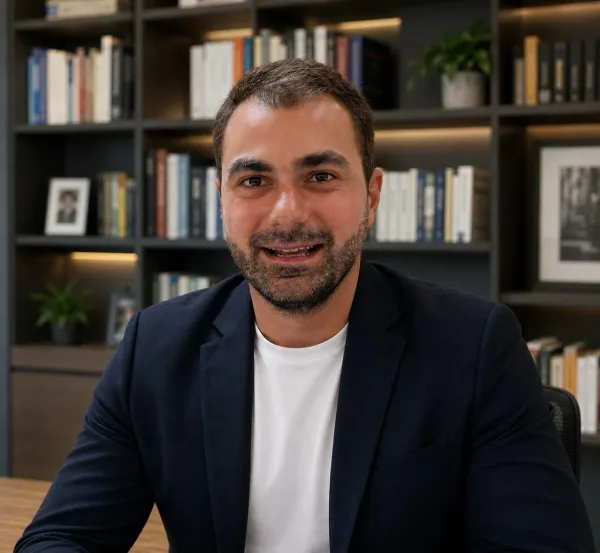
President
Andri Chanturia
Founder · KiwiPost
“Business grows where people are willing to build relationships first.”
Meet Andri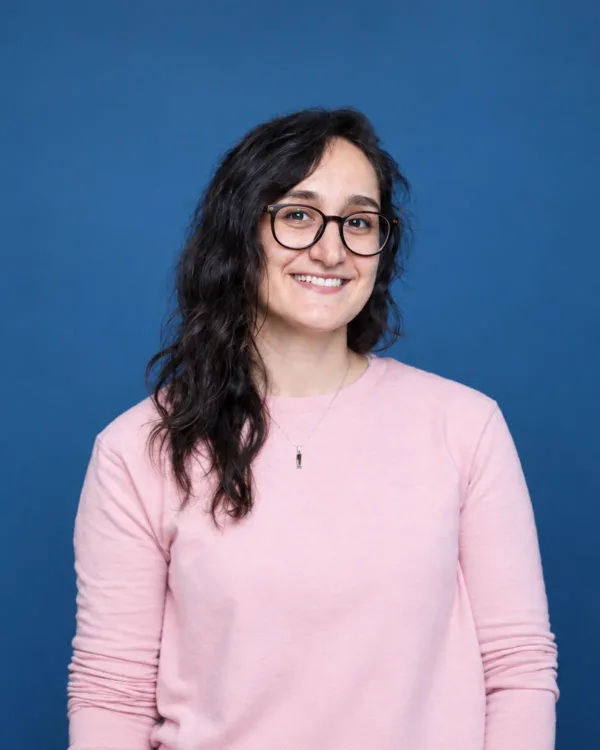
Co-Founder at Z.axis | Business Developer at LingoFlow
“A corridor that carries knowledge as easily as it carries cargo. ”
I'm a geographer who turned into an engineer. Fourteen years of working with spatial data, infrastructure, and the systems that carry both: first mapping places, later building the pipelines that make the data usable.
In 2020 I co-founded Z·axis, a spatial data analysis and visualisation studio, where I lead the technical work. We turn complex data into clear visual narratives, helping organisations communicate evidence that moves people to act. I relocated to Tashkent to lead our work in Central Asia.
At the beginning of 2026 I also joined LingoFlow as business developer for Uzbekistan. It began in Georgia, has taught more than 15,000 students, and now teaches English online to companies well beyond our borders. We help local firms remove the language barrier standing between them and international markets.
Z·axis connects people through data, LingoFlow through language.
There's an idea from the Hungarian writer Frigyes Karinthy, in a 1929 story called Chains, later known as six degrees of separation that any two people on earth are linked by no more than five or six connections.
When you move to another country to build something, that chain stops being a curiosity and becomes infrastructure. Being in the right room, holding the right information at the right moment, is most of what decides how quickly you get anywhere.
I spent my first months in Tashkent as an unofficial translator, explaining Georgia to Uzbek colleagues and Uzbekistan to Georgian ones, while working out registration, banking and institutions for myself. The Hub is that, made deliberate instead of accidental.
First, we understand each other quickly. Two companies from this part of the world spend far less time explaining themselves to each other than either would spend explaining themselves to a partner from further west.
The second reason is timing. Both countries are rebuilding the same things at the same moment digital public services, data infrastructure, and the skills to operate them. That creates demand on one side and capability on the other, in both directions at once.
And it is no longer theoretical. Georgian companies are already trading here, so nobody has to be the one who tests it first.
Trust takes time, and everyone knows that. What catches people off guard is more practical: credibility doesn't cross the border with you.
Your track record belongs to the company that signed the contracts. Not to you personally, and not to the new entity you have just registered. That company is zero years old on its first day, however experienced its people are, and clients assess the company rather than the founders.
It isn't a sales problem, so better pitching doesn't solve it. You keep the original company alive instead of replacing it, you document the relationship between the two properly.
What has been missing between our countries was never goodwill. At the official level there is plenty. What's missing is ordinary working knowledge. Our job is to end the repetition of mistakes, and to keep the traffic moving faster both ways. An Uzbek company expanding outward should find us as useful as a Georgian company arriving here.
Learn the institutional map and not only the commercial one, because the two countries are built differently and a strategy that works in one can be close to useless in the other.
Then ask. Someone has usually already solved the thing you are staring at, and the answer costs them five minutes.
Companies that entered one of our markets through the Hub and are still trading there three years later. Resistance, not just signatures -anyone can host a signing ceremony.
“A corridor that carries knowledge as easily as it carries cargo.”
Katie Tughushi-Flament — Founding Member
Founder · KiwiPost
“Business grows where people are willing to build relationships first.”
Meet Andri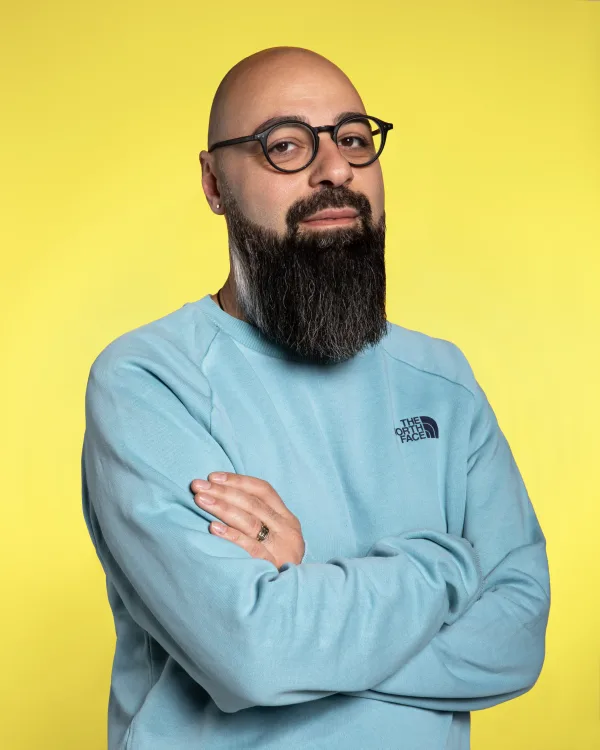
Chief Product Officer · UCMG
“My main advice would be: don't try to enter a new market from a distance.”
Meet Irakli
Managing Partner · EXALT
“I believe in the free market and the power of entrepreneurship.”
Meet Georgy